
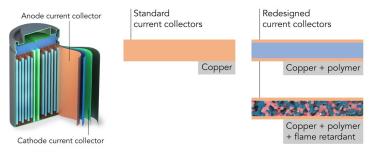
Scientists at Stanford and the Department of Energy's SLAC National Accelerator Lab have reengineered the collector, one of the heaviest battery components, so they weigh 80% less and immediately quench any fires that flare up. Using polymers in place of the sheets of copper or aluminum foil made the collector lighter, and increased the energy density of lithium-ion batteries by 16-26%. Reducing battery weight and flammability could also have a big impact on recycling by making the transportation of recycled batteries less expensive.